what it takes to be a successful classicla musician
The Job and What's Involved
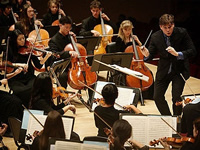 Classical musicians perform, compose and/or carry music. They might play an instrument or sing live or recorded classical music, practice session work for bankroll tracks, adverts and films, conduct performances, or write music.
Some musicians decide to extend their piece of work in music teaching - for example, working with the education section of an orchestra or opera visitor. Others railroad train as full-time school music teachers. Many classical musicians brand a living by combining performing with instrumental or vocal educational activity, either privately or as a visiting teacher in schools. Some work in the bands of the Armed Forces.
The life of a classical musician involves regular and intense do, ofttimes for many hours a twenty-four hours. This might be combined with a hectic schedule of performances, education work or recordings.
Some take the exceptional talent and personality to go solo performers, but opportunities for this type of work can be limited. With experience, musicians tin can perform in an orchestra, chamber group, ensemble or chorus.
Classical musicians unremarkably work long and irregular hours, practising alone, taking part in rehearsals and performing. Evening and weekend working is mutual, and there can be a lot of travel in the Britain and abroad.
Musicians may work in a diverseness of environments, from indoor concert halls, theatres and recording studios, to outdoor venues such as parks and the gardens of stately homes. Musicians can too work in schools and other educational settings.
Some performance venues, such as cathedrals and churches, can be cold and draughty, as can rehearsal rooms.
Starting salaries for employed orchestral musicians may be around £22,750. Still, salaries vary a lot depending on the type of work a musician does.
Musicians are ofttimes self-employed and need to fill gaps in their diary between blocks of regular scheduled work. Many supplement their incomes with other work. The Musicians' Wedlock and the Incorporated Gild of Musicians suggest the sort of rates musicians could exist paid. These vary widely depending on the type of work and the experience of the musician.
Getting Started with this Career Selection
Classical music is a highly competitive area of work. Musicians are frequently self-employed, and very few earn their living as solo performers, merely oft will make successful careers playing in orchestras, pocket-sized ensembles, professional choruses, conducting, composing and working in music education.
Opportunities for full-time classical singers are more than limited than for instrument players. Well-nigh opportunities are within opera, or with ane of the small number of professional choruses or chamber choirs.
Conductors face very stiff competition for the modest number of jobs available.
Many classical musicians combine their performing career with teaching or in working with community groups.
Education and Training
Classical musicians need extensive formal musical education and training, often to postgraduate level. Most have learnt to play one or more than instruments from an early age. They usually take a series of graded examinations, including theory of music.
Formal training for singers can sometimes begin later, since the voice takes time to mature.
Useful qualifications include:
* GCSEs/S grades and A levels/H grades in music.
* BTEC National Diploma in Music Practice. Entry is with iv GCSEs/S grades (A-C/1-3), or the equivalent.
* Scottish National Document Courses in Music. Entry requirements can vary from no formal academic qualifications to 3 S grades (1-3).
At that place are ii main types of higher educational activity courses:
* specialist vocational degree courses in a music college (a conservatoire)
* music caste courses in a university or higher education institution, including music in the community courses.
The minimum academic entry requirements are usually two A levels/H grades, or the equivalent, including music. Entrants often need to have grade eight in their first musical instrument, and sometimes class half-dozen in their second. Auditions and interviews form function of the choice procedure.
It is also possible to train as a classical musician with the Regal Marines, Army and RAF. Musical educational activity is combined with basic military and offset aid training. A high standard on i instrument is commonly needed. Entry is by audience.
Musicians who want to teach music in a secondary schoolhouse usually accept a degree in music, followed by a Postgraduate Certificate in Education (PGCE). It is as well useful to get experience of working in the customs. Working with established pedagogy departments in orchestras, ensembles and opera companies is an option too.
Operatic and choral singers often sing in foreign languages, and then cognition of other languages tin be an advantage.
A Few More Exams Y'all Might Need
Professional person Youth and Community Workers usually have a qualification in youth work validated by the National Youth Agency (NYA), (or Youth Quango for Northern Ireland), and recognised by the JNC for Youth and Community Workers.
Featured Chore Guide - Laboratory Technician

Laboratory technicians comport out routine laboratory tests and perform a variety of technical back up functions to help scientists, technologists and others with their piece of work. They can work in inquiry and development, scientific assay and testing, education and manufacturing.
They are employed in a wide range of scientific fields which bear on almost every attribute of our lives.
________________________________________________________________________________
Skills and Personal Qualities Needed
Classical musicians demand:
- Outstanding musical ability.
- To be cocky-disciplined and very hard-working.
- To be totally defended to a very enervating profession.
- To piece of work well on their own and also with other musicians.
- Self-confidence.
- Energy and stamina.
- To be willing to produce piece of work to an exacting high standard.
- To exist resourceful and very well-organised.
Your Long Term Prospects
Besides every bit formal qualifications, musicians need to brand a proper name for themselves by inbound competitions, bursaries and awards, taking auditions, participating in special schemes for young artists, joining amateur groups and giving costless concerts. This may take many years and, even once established in a career, maintaining success tin exist time-consuming.
Orchestras offering opportunities for talented musicians, who may rise to section principal, sub-principal and primary. Orchestras and opera companies can offer opportunities for musicians who desire to extend their practice through their education departments.
Get Farther Information
The Arts Council of England,
fourteen Slap-up Peter Street, London SW1P 3NQ
Tel: 0845 300 6200
Website: www.artscouncil.org.uk
British Phonographic Establish (BPI), Riverside Building,
County Hall, Westminster Span Road, London SE1 7JA
Tel: 020 7803 1300
Website: www.bpi.co.uk
Creative and Cultural Skills, quaternary Flooring, Lafone House,
The Leathermarket, Weston Street, London SE1 3HN
Tel: 020 7015 1800
Website: www.ccskills.org.uk
Equity, Social club House, Upper St Martins Lane, London WC2H 9EG
Tel: 020 7379 6000
Website: www.disinterestedness.org.united kingdom of great britain and northern ireland
Headquarters Music Services, Royal Air Force, Uxbridge UB10 0RZ
Tel: 01895 815286
Website: world wide web.rafmusic.co.britain
Incorporated Society of Musicians (ISM),
ten Stratford Place, London W1C 1AA
Tel: 020 7629 4413
Website: world wide web.ism.org
Musicians' Marriage
Tel: 020 7582 5566
Website: world wide web.musiciansunion.org.uk
Royal Marines Band Service, HMS Nelson,
Queen Street, Portsmouth PO1 3HH
Tel: 023 9272 6167
Website: www.royalmarinesbands.co.great britain
Majestic Armed services School of Music, Kneller Hall, Twickenham TW2 7DU
Tel: 020 8744 8608
Website: www.army.modernistic.great britain/music
Scottish Arts Council, 12 Manor Place, Edinburgh EH3 7DD
Tel: 0131 226 6051
Website: www.scottisharts.org.uk
Other Related Jobs
- Player
- Military machine Musician
- Dancer
- Music Composer
- Music Conductor
- Music Promotions Manager
- Music Teacher
- Popular Musician
- Vocaliser
Boosted resources
Source: https://www.inputyouth.co.uk/jobguides/job-classicalmusician.html
0 Response to "what it takes to be a successful classicla musician"
Post a Comment